
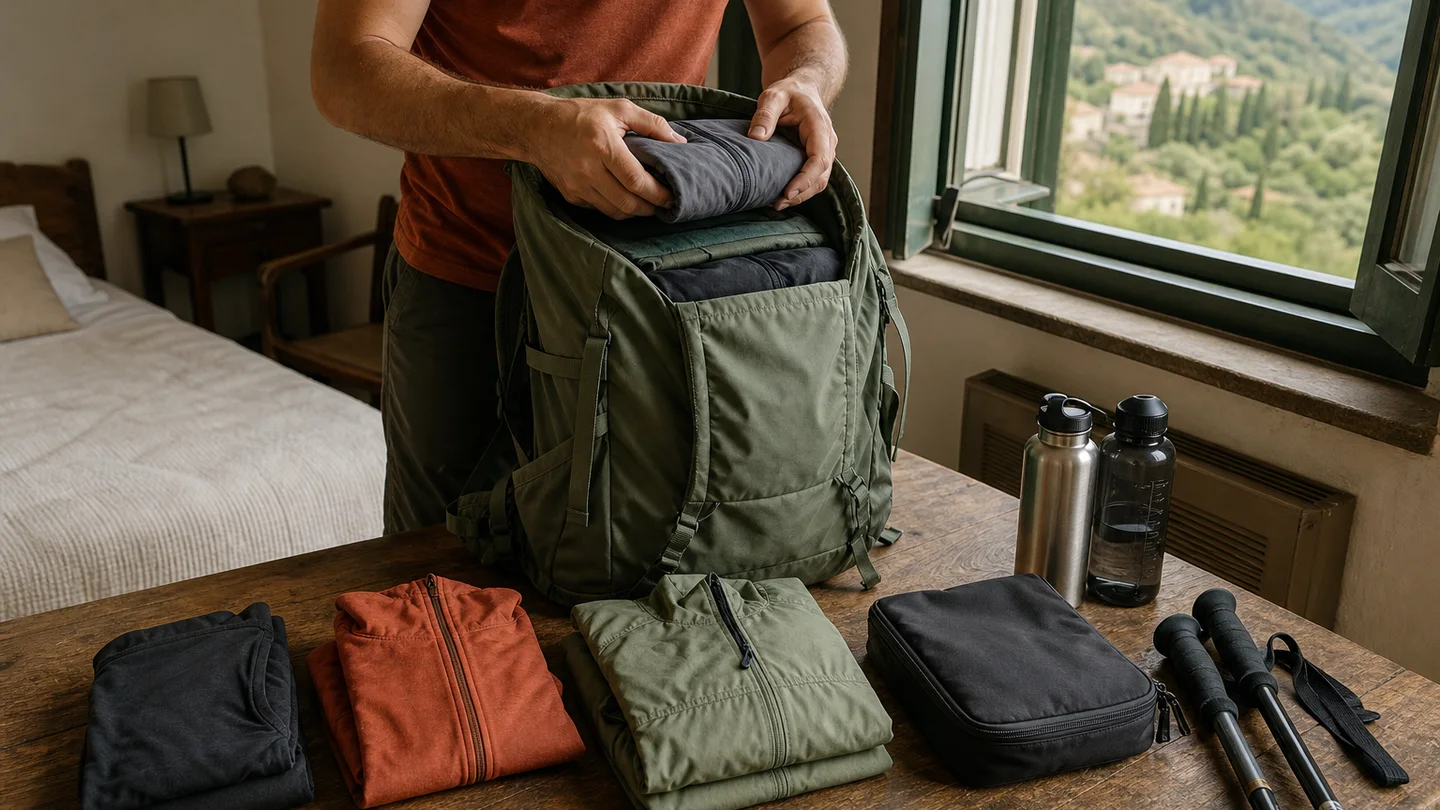
Pack for the actual route rather than every imaginable emergency. Weigh everything, test the full load on a long walk and keep water, waterproofs, food, phone and basic safety kit easy to reach.
Start with the route, not a universal checklist
A 35-litre pack may be plenty for an inn-to-inn walk and completely wrong for a self-supported camp. Begin with where you sleep, where food and water are available, the highest point, likely weather and how remote each stage is.
Place every item into one of three groups: essential for safety, used every day, or useful only in a specific condition. Anything that does not fit should have to justify its weight.
The core list for walkers staying indoors
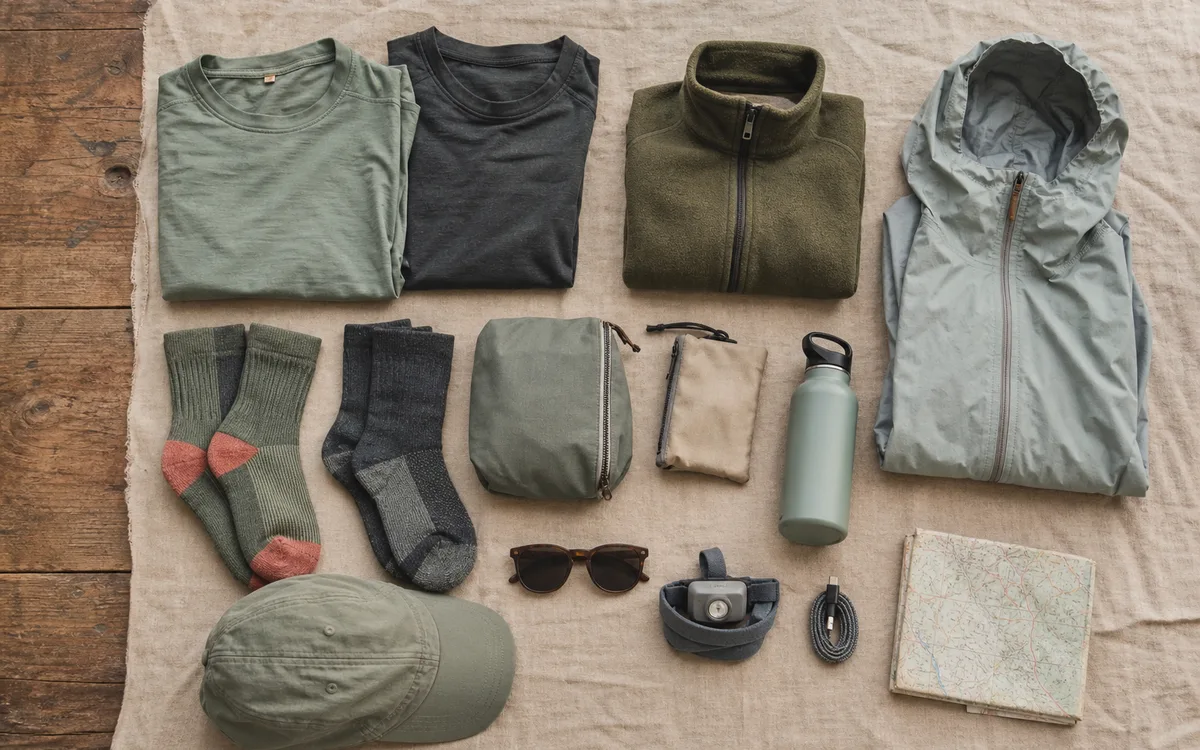
For three to seven days, clothing quantities barely change because you wash along the way. Pack one walking set, a light evening set, two or three pairs of socks, underwear, a warm layer, waterproof shell and simple sleepwear. Add sun or cold-weather protection for the season.
The shared essentials are navigation offline as well as online, phone and cable, water capacity for the longest dry stretch, food between services, a headtorch, small first-aid and foot-care kit, medication, documents and a little cash.
- Pack liner or robust dry bags for sleep clothes and electronics.
- Waterproof shell that can be reached without emptying the bag.
- A bottle or bladder sized for the least-served stage.
- Fine tweezers, blister dressings, gauze and personal medication.
Pack by access, not by visual perfection
Heavy, dense items sit close to the back and around the middle of the pack. Light layers fill the outer space. Waterproofs, snacks, water, phone and the foot-care pouch must be available without dismantling everything.
Use only a few organisers. Ten tiny bags add weight and turn every stop into a search exercise. One dry system for critical items and a clear place for daily essentials is enough.
The dress rehearsal that catches most mistakes
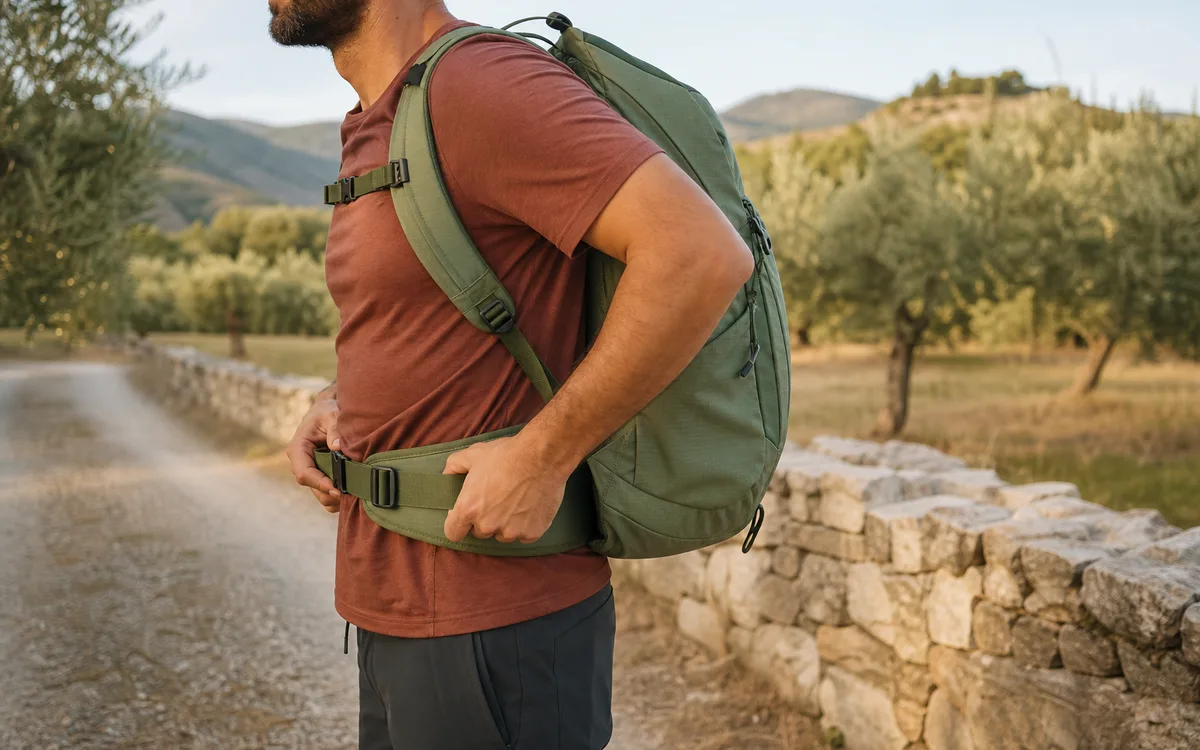
A week before departure, load the pack with the actual water and food and walk for at least three hours on mixed ground. Adjust the back length, hip belt and straps; note any rubbing; retrieve your waterproof and foot kit as though the weather had changed.
Weigh the complete pack rather than relying on a percentage rule. Body size matters, but so do experience, injury history, terrain and water. If it hurts in training, it will not become kinder on day four.
The weight that hides in “small” decisions
Duplicates, full-size toiletries, spare footwear, large power banks and too much food usually create the biggest gains. The pack itself matters too: a heavy empty rucksack consumes your allowance before the first layer goes in.
Avoid hanging equipment outside unless it has a precise purpose. Loose items swing, snag and get wet. The goal is not a fashionable base weight; it is reaching the end of each stage without avoidable pain.
Quick answers
What size rucksack do I need?
For an inn-to-inn walk, 30–40 litres is usually enough. Camping and cooking equipment require more space. Let the real kit determine capacity rather than the number of days.
How many changes of clothes for a week?
If washing is possible, only a few quick-drying, interchangeable pieces are needed. The clothing list is almost the same for three days and seven.
How heavy should the pack be?
There is no universal figure. It must suit your body, route, water needs and experience. Weigh it fully loaded and test it for several hours before departure.
Sources and updates
We check safety information against health bodies, public authorities and route managers. Always confirm current local conditions and rules before setting off.