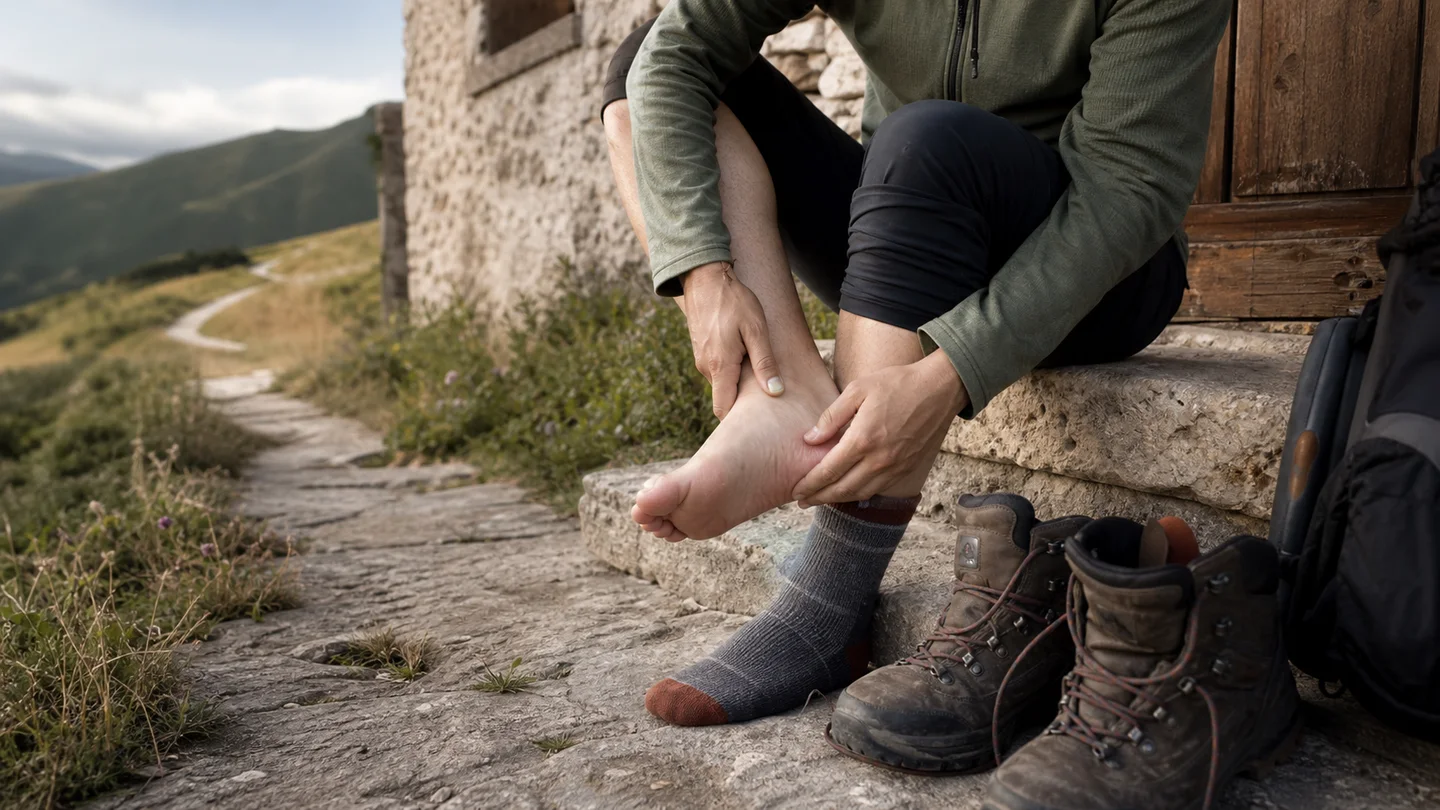
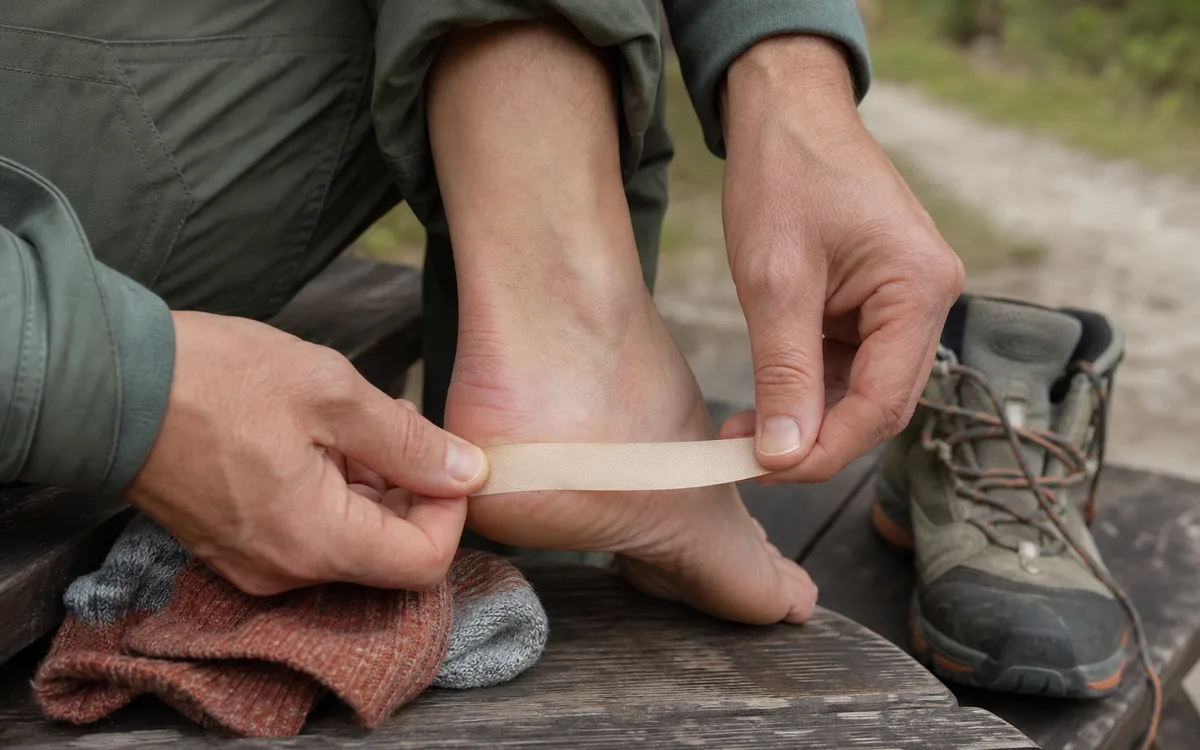
At the first hot spot, stop, dry the foot and protect the area. Tested footwear, correctly fitting socks and an accessible dry pair prevent more trouble than any treatment used once a large blister has formed.
General information for preparing a walk; it is not a diagnosis, treatment or a substitute for professional medical advice.
Why comfortable shoes can hurt on day three
Walking blisters come from a combination of friction, pressure, heat and moisture. A shoe that feels perfect for an hour may behave differently after 20 km, when feet have swollen, socks are damp and tired movement is less precise.
Heels, forefeet and toe edges are common sites, but every walker has a personal map of vulnerable areas. Training walks reveal it. Never save new footwear or insoles for the start of the trip.
Think in terms of foot, sock and shoe
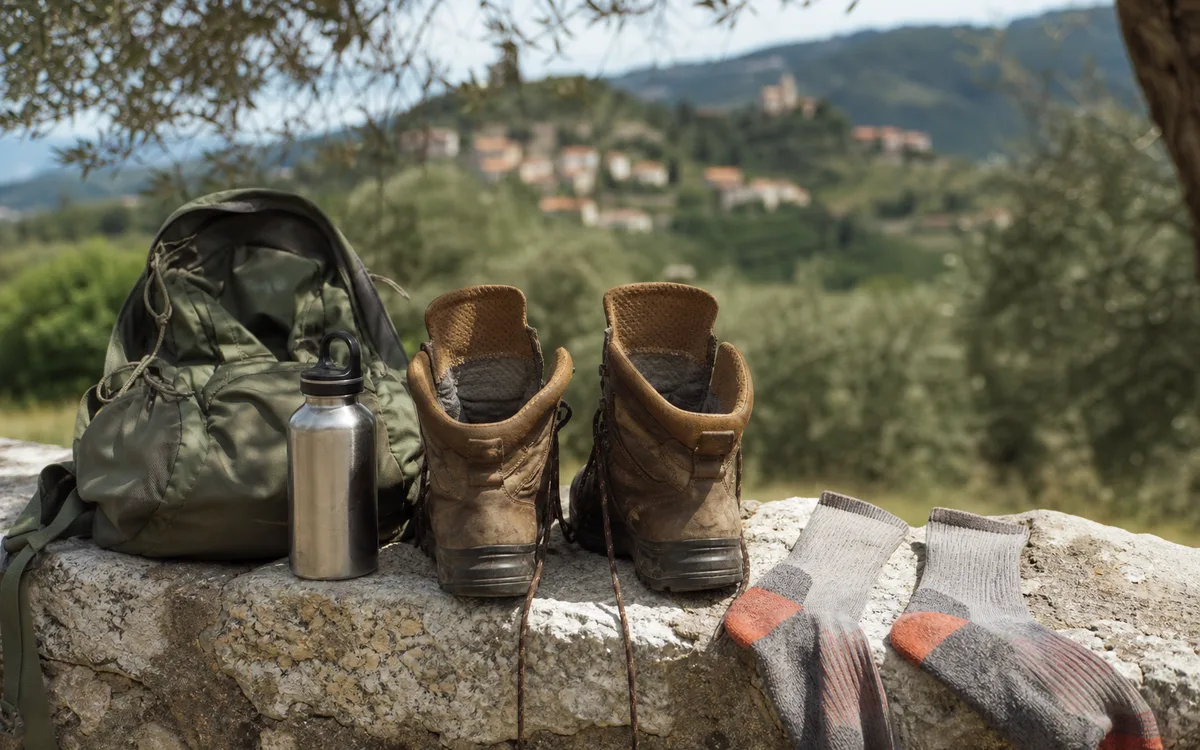
The shoe should hold the heel without squeezing the toes, including on descents. Socks need to fit smoothly and manage moisture. Keep a dry pair where you can reach it; changing at lunch can transform the second half of a hot stage.
Trim nails a few days before departure and smooth sharp edges. If a particular area always rubs, use a tested tape or barrier before it becomes sore. New insoles change both volume and pressure, so trial them properly.
- Retie footwear before a long descent.
- Remove grit and sock creases immediately.
- Air feet and socks during the longest break.
- Keep hydrocolloid dressings, gauze and tape dry and accessible.
The hot spot is the moment that matters
A local burning sensation, pink skin or a sock that suddenly feels wrong is the warning. Five minutes now may save an hour tomorrow. Remove the shoe and sock, dry the skin, identify the cause and apply a smooth protective layer without folds.
Do not wait for the next café or the top of the climb. Once the upper layers of skin begin separating, every further step magnifies the problem.
Once a blister has formed
Small, manageable blisters are generally best left intact: the roof is a natural barrier. Cover and cushion the area so pressure falls around rather than directly through it.
Large, very painful or infected-looking blisters need professional advice, particularly for anyone with diabetes, circulation problems or reduced immunity. Redness spreading beyond the area, pus, warmth or fever are reasons to stop self-treatment.
Before the next stage, solve the cause as well as covering the damage. Alter the lacing, remove the crease or rethink the footwear; otherwise the dressing merely protects a problem that is still being created.
Quick answers
Should I burst a hiking blister?
If it is small and tolerable, leave it intact and protect it. Large or very painful blisters, and any sign of infection, deserve professional advice rather than improvised treatment.
Are two pairs of socks better than one?
They can be for some walkers, but only if tested beforehand and there is enough room in the shoe. A cramped double layer may increase pressure.
Should hiking shoes be bought a size larger?
They need room for swelling and descents, not an arbitrary extra size. Fit them late in the day with your walking socks and test them on long outings.
Sources and updates
We check safety information against health bodies, public authorities and route managers. Always confirm current local conditions and rules before setting off.