
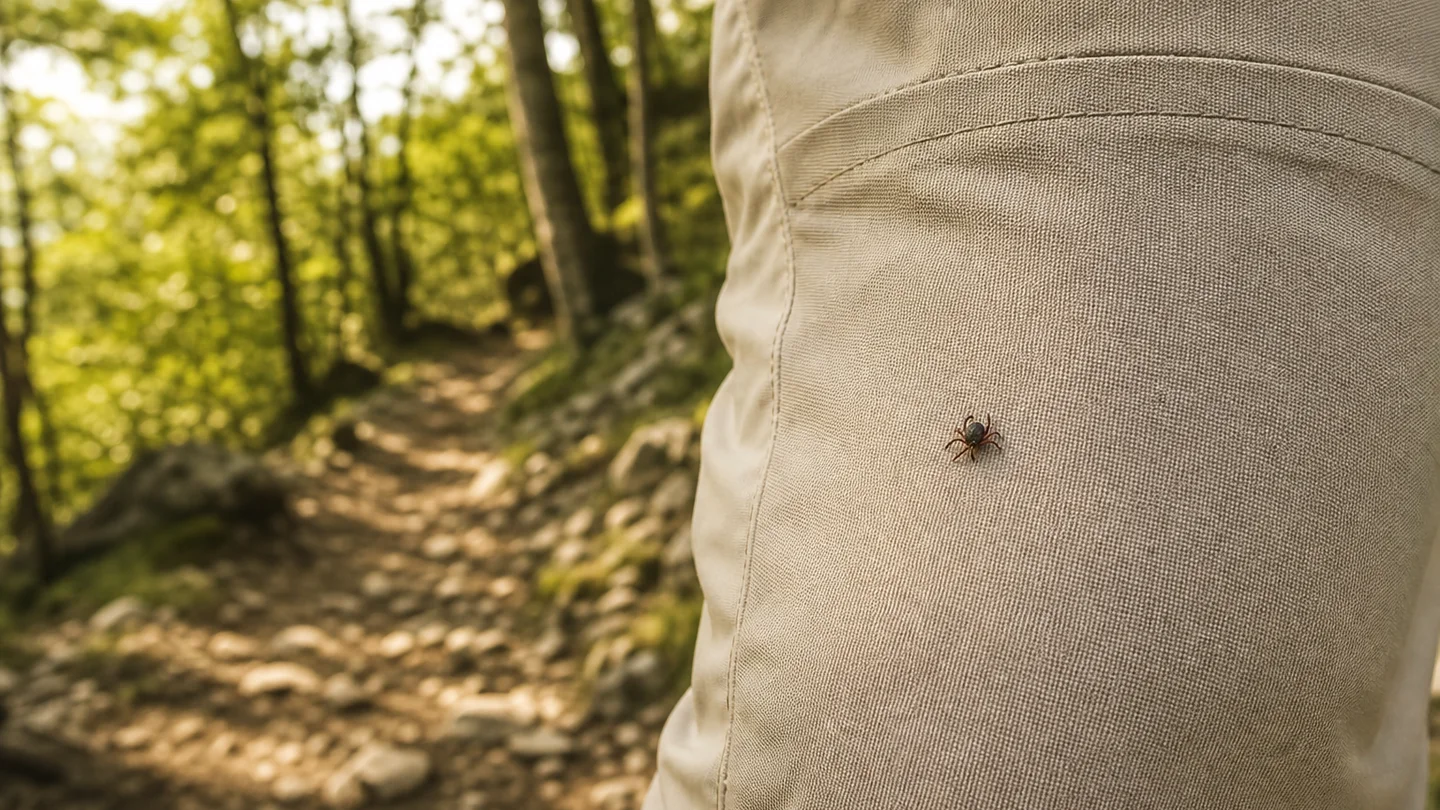
After any day through long grass or undergrowth, check skin, hair, clothing and your pack. If a tick is attached, grip it close to the skin with fine-tipped tweezers and remove it steadily. Do not use oil, alcohol, heat or other folk remedies.
General information for preparing a walk; it is not a diagnosis, treatment or a substitute for professional medical advice.
Where hikers actually pick up ticks
Ticks neither jump nor fly. They wait on vegetation and transfer when a person or animal brushes past. Long grass, damp woodland edges, bracken and overgrown path margins are more relevant than altitude alone.
Activity varies with temperature, humidity and region, so there is no single “tick season” for the whole of Italy. Spring and early summer deserve particular care, but mild conditions can keep ticks active beyond the dates you might expect.
Exposure rises when you leave the middle of the path, sit directly in vegetation or drop clothing and packs into grass. Staying on the clear line of the trail is a small habit with a useful effect.
Practical protection on a multi-day walk
Pale long trousers, closed footwear and higher socks reduce exposed skin and make a moving tick easier to spot. On heavily overgrown sections, tucking trouser cuffs into socks may not look elegant, but it closes an obvious route in.
Repellents containing DEET or icaridin can help when used exactly as the label directs. They complement rather than replace the evening check. Dogs need veterinary-approved parasite treatment and their own daily inspection.
- Keep to the centre of grassy paths where possible.
- Do not leave packs or spare layers directly in vegetation.
- Shake out clothing before taking it into your room.
- Shower and check your whole body at the end of the stage.
A three-minute check at the end of the day
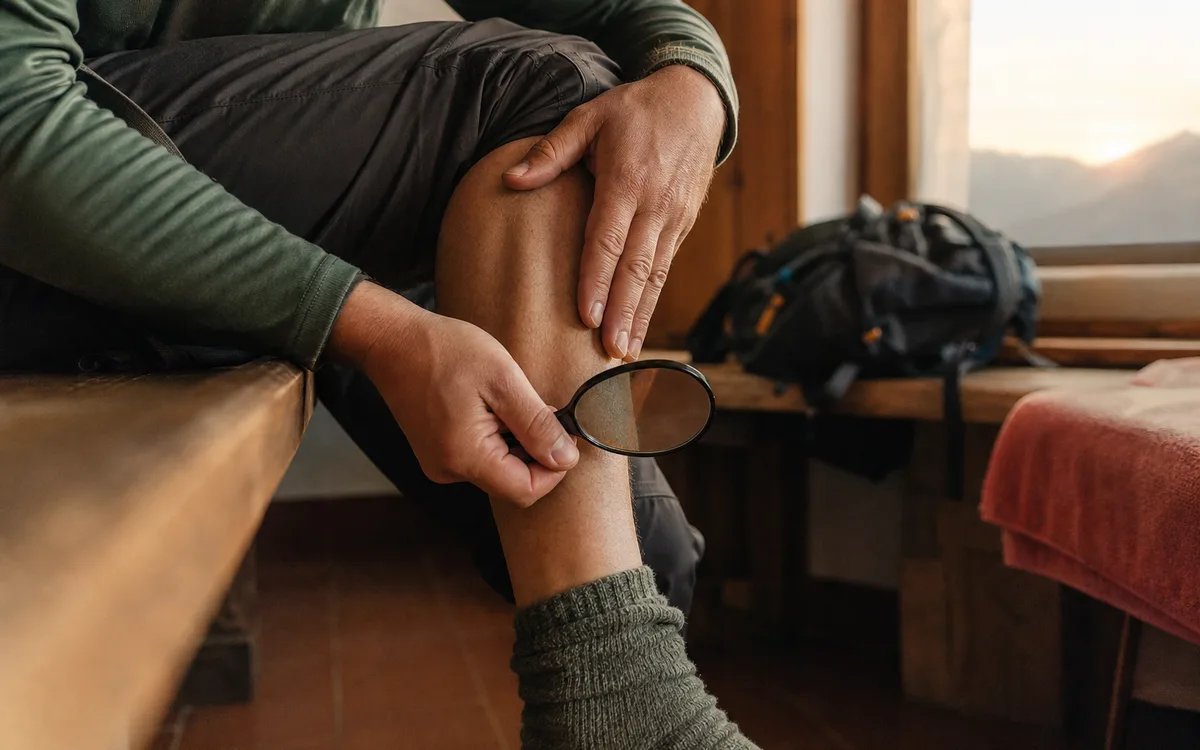
Pay particular attention to ankles, behind the knees, groin, navel, armpits, neck and hairline. Running a hand slowly over the skin can reveal something that looks more like a new scab or freckle than an obvious insect.
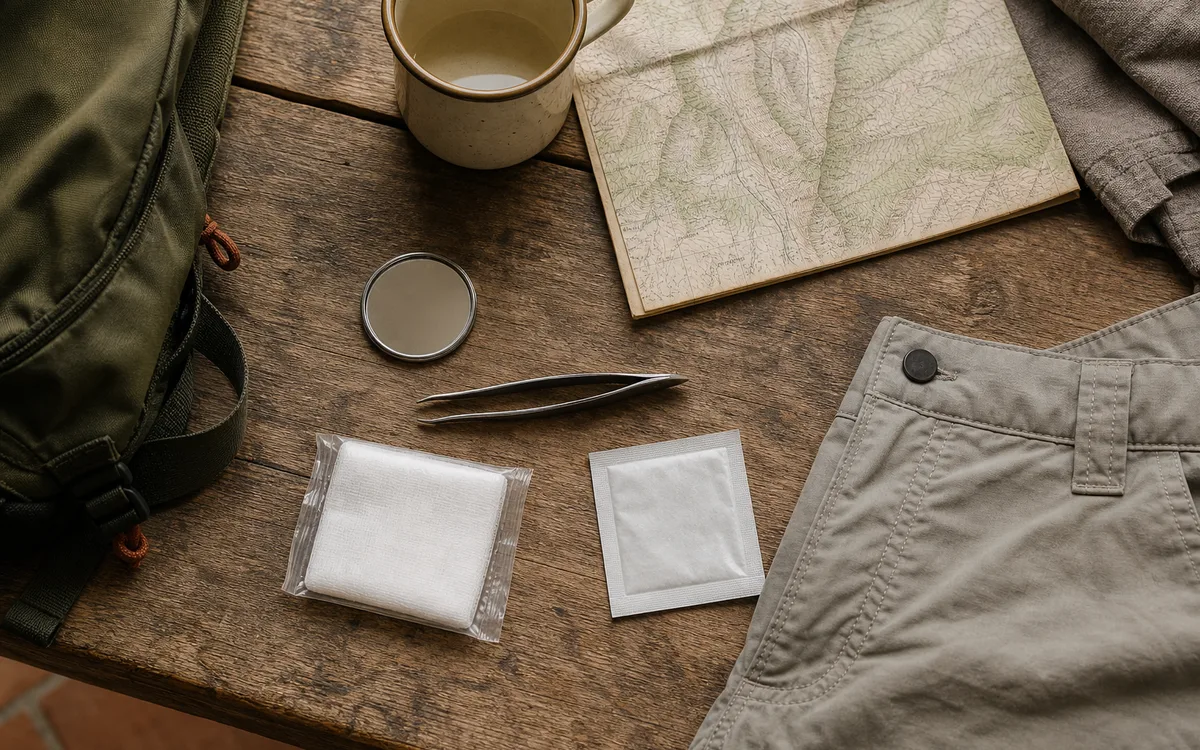
Check seams, socks and the inside of your footwear too. In a group, asking someone to look at your back and scalp is perfectly sensible. Fine-tipped tweezers belong in an accessible pocket, not at the bottom of the pack.
Removing a tick without making matters worse
Grip the tick as close to the skin as possible, avoiding pressure on its body, and pull upwards with a slow, controlled movement. Italian Ministry of Health guidance allows a slight twist as you remove it. Clean the area and wash your hands afterwards.
Do not use oil, petroleum jelly, alcohol, solvents, heat or cigarettes. Irritating the tick may increase the chance of material being regurgitated into the bite. If mouthparts remain and will not lift out easily, seek professional advice rather than digging at the skin.
Note the date and watch the area over the following weeks. Fever, feeling unwell or an unusual expanding rash should prompt medical advice, with the time and place of the bite clearly explained.
Quick answers
Should I twist a tick or pull it straight out?
Use fine-tipped tweezers close to the skin and remove it slowly upwards. Italian Ministry of Health guidance says a gentle twisting movement may accompany the pull; do not squeeze the body.
Can I cover the tick with oil or alcohol first?
No. Oil, alcohol, solvents and heat can stress the tick and are specifically discouraged.
When should I speak to a doctor?
Seek advice if you cannot remove it cleanly, or if fever, illness or an unusual skin reaction develops afterwards. Explain when and where the bite happened.
Sources and updates
We check safety information against health bodies, public authorities and route managers. Always confirm current local conditions and rules before setting off.