
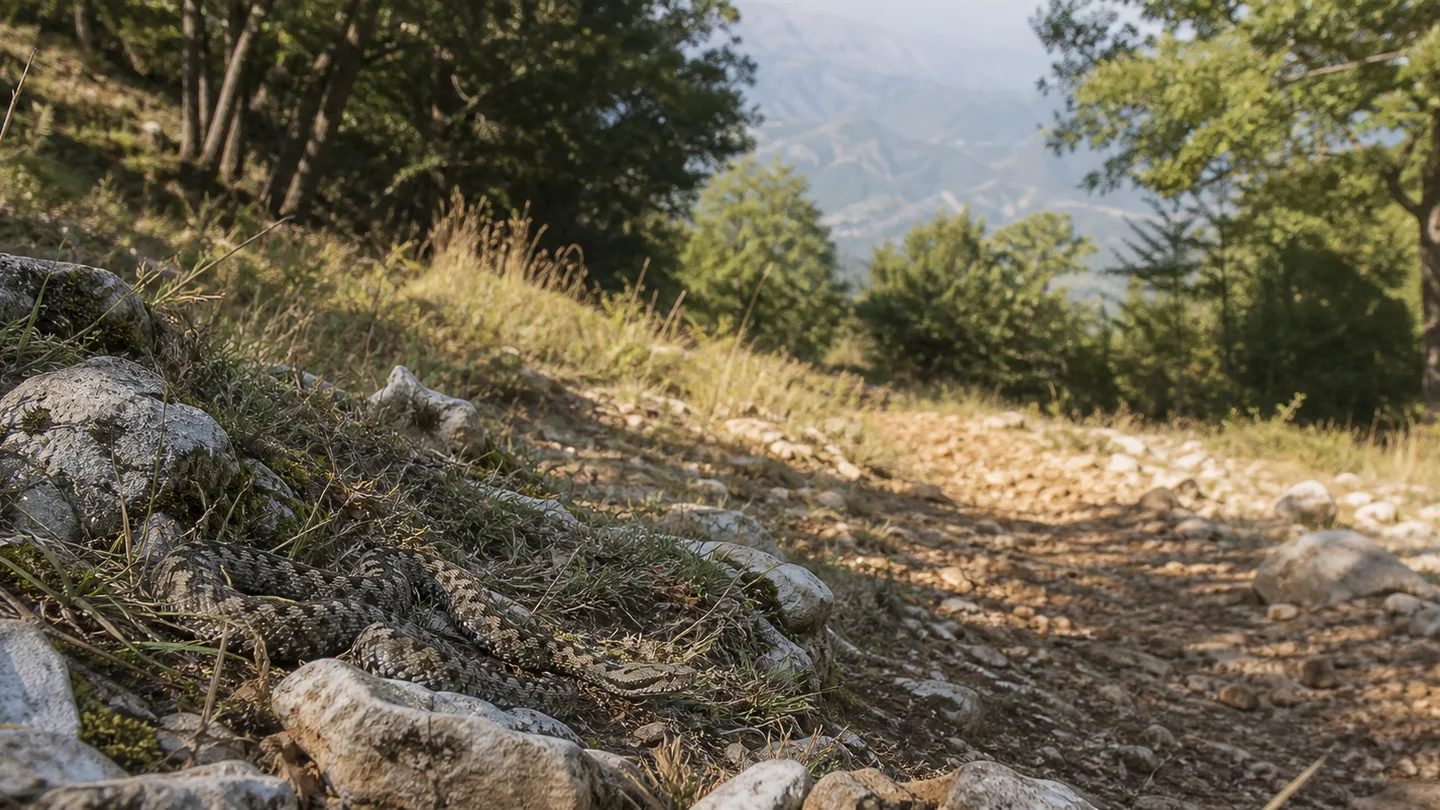
Do not move closer for identification or try to shift the snake. Stop and back away calmly. If anyone is bitten, call 112, minimise movement and do not use ice, tourniquets, cuts or suction.
General information for preparing a walk; it is not a diagnosis, treatment or a substitute for professional medical advice.
Distance is the most useful safety measure
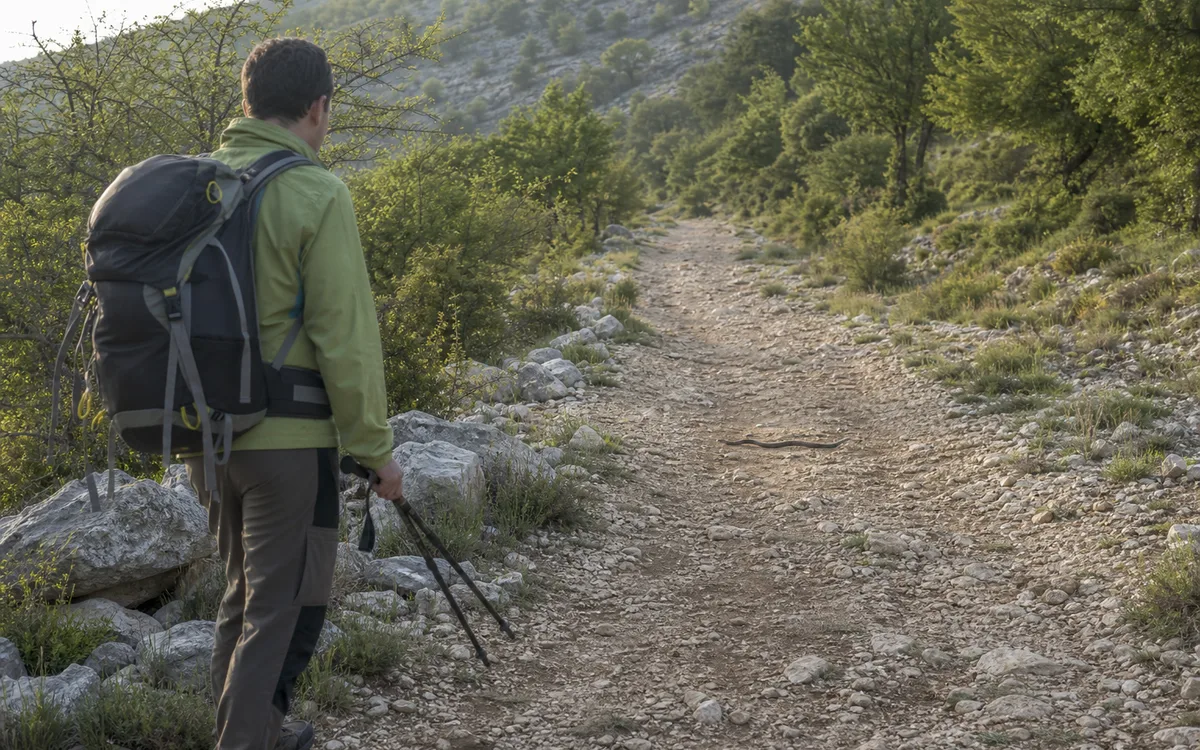
A viper gains nothing from approaching a person. Risk rises when it is surprised at close range, stepped on or handled. If you see a snake, stop several metres away, avoid surrounding it and keep a clear route open for it to leave.
On warm paths, snakes may rest near stones, walls and grassy edges. Look before placing hands or feet, particularly around logs and rock steps. Trekking poles can help part vegetation ahead, but should never be used to prod the animal.
Reducing risk without walking in fear
Closed footwear, long trousers and a little extra attention in poor visibility are proportionate precautions. Normal footfall often gives a snake enough warning. Keep dogs close and on a lead so they cannot investigate rocks or chase wildlife.
You do not need to identify the species in a few seconds. Colour and head shape change with light, age and posture. The walker’s decision is the same for any snake: distance, calm and no contact.
If someone is bitten
Call 112 immediately and give the location, the person’s condition and the nearest access point. Help them sit or lie down, keep them calm and reduce movement. Remove rings, bracelets or tight footwear before swelling makes that difficult.
Italian Red Cross advice is to wash with soap and water. Do not cut the skin, suck the bite, apply ice or tighten a tourniquet. Antivenom is a hospital decision and should not be carried or administered independently.
Do not waste time trying to catch the snake. A description or distant photograph is secondary to following the emergency operator’s instructions and reaching professional care.
The genuinely useful additions to your kit
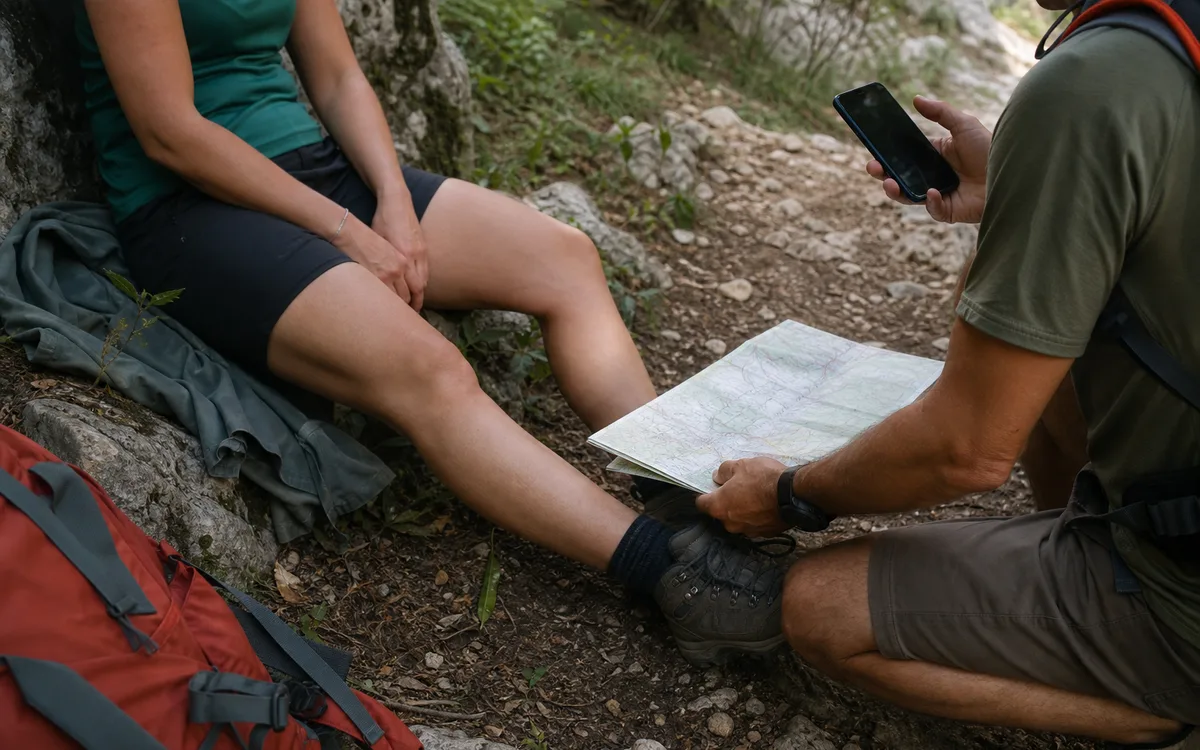
There is no anti-viper gadget that replaces sensible behaviour. Carry a charged phone, offline mapping and a reliable way to share coordinates. On remote stages, tell someone the route and expected arrival time.
Fear becomes more manageable when the decisions are already made: do not touch, move back, call 112 after a bite. Three clear rules beat a collection of dubious remedies.
Quick answers
Do vipers chase people?
No. Given space, snakes normally remain still or move away. Stop and retreat calmly rather than provoking them.
Should I carry antivenom?
No. Antivenom requires medical assessment and can itself cause serious reactions. It belongs in professional healthcare settings.
Should I tie something tightly above the bite?
No. The Italian Red Cross advises against tourniquets, ice, cutting and suction. Call 112 and minimise movement.
Sources and updates
We check safety information against health bodies, public authorities and route managers. Always confirm current local conditions and rules before setting off.