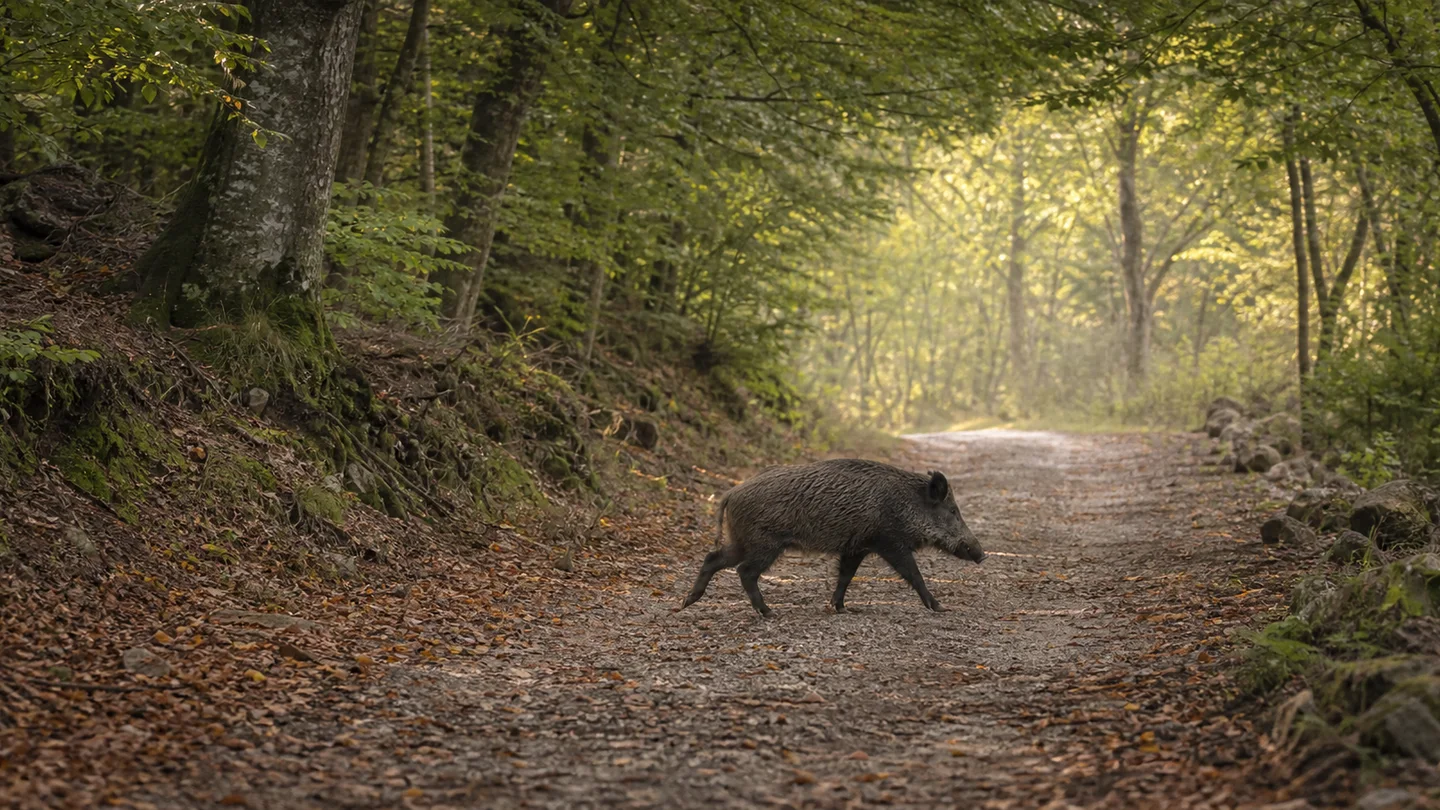
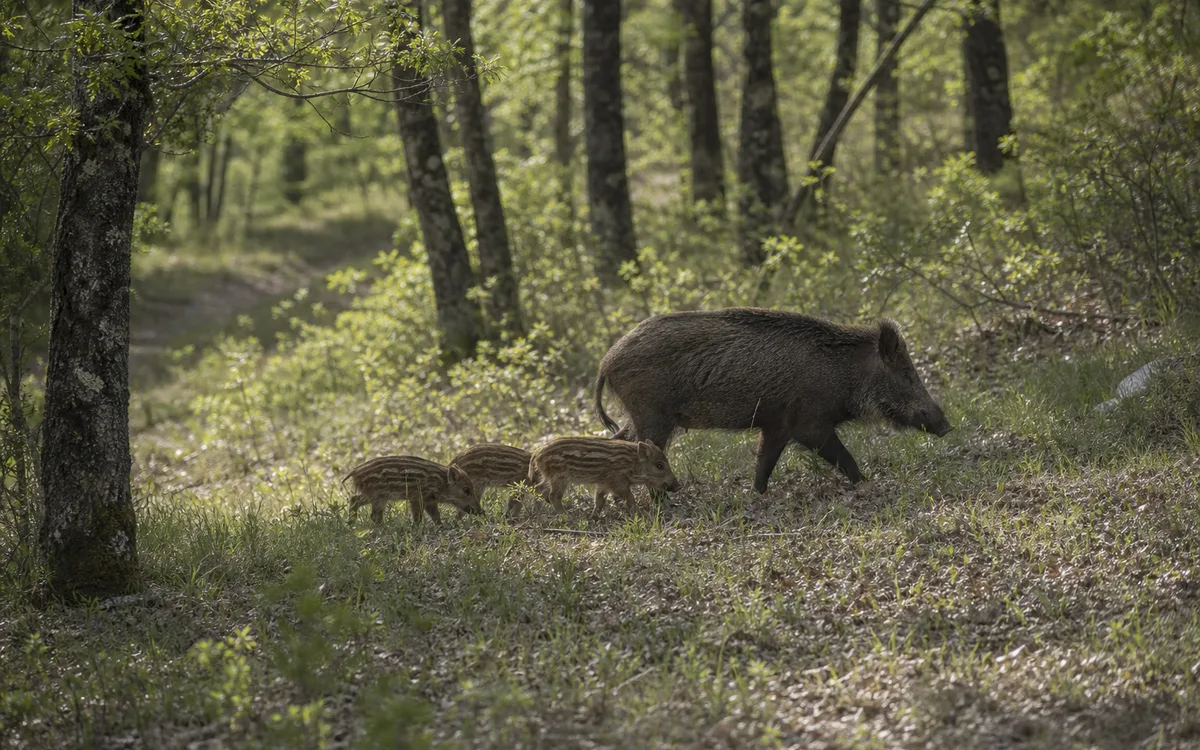
Stop, stay composed and back away slowly while leaving a clear escape route. Do not approach piglets, and bring your dog immediately to heel on a short lead.
First rule: never block the way out
If the animal is distant and has not noticed you, stop and give it time. If it has seen you, speak normally and back away without sudden movement. Never stand between a sow and her piglets, and do not edge closer for a photograph.
Snorting, stamping, a lowered head or short advances all mean the animal wants more room. Increase the distance. On a narrow path, use a substantial tree, wall or change in level as cover while leaving the boar a route to choose.
Walking with a dog changes the encounter
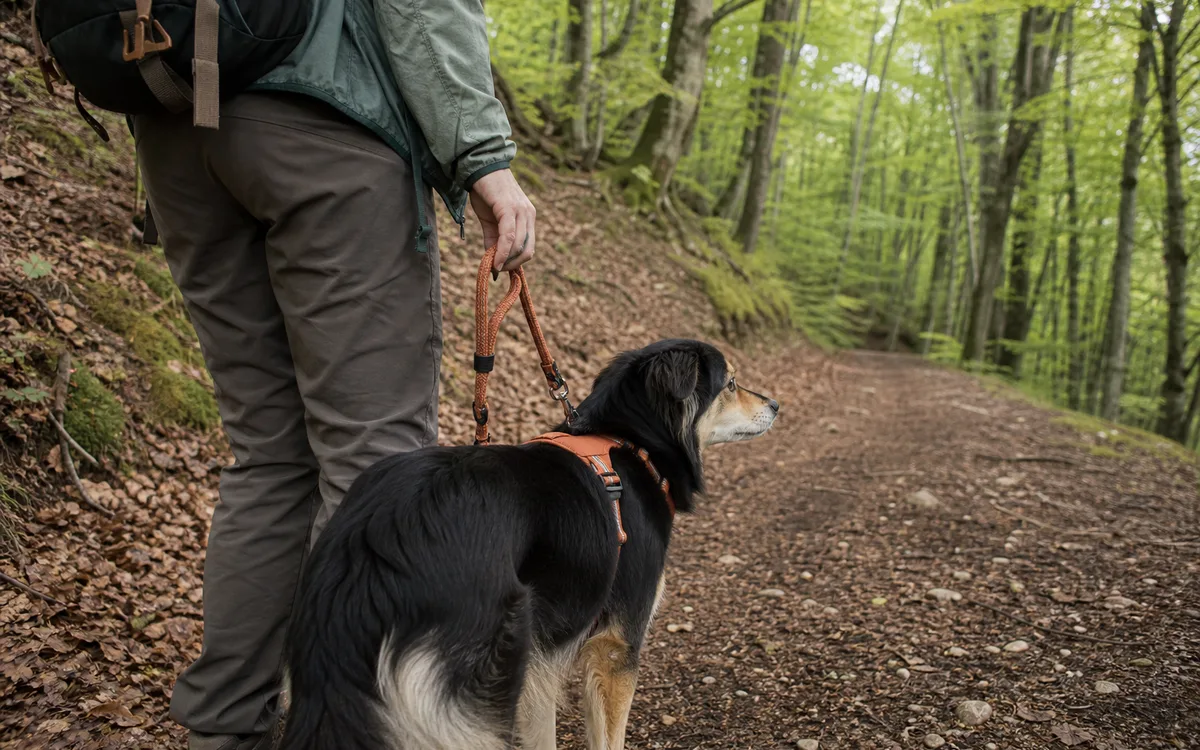
Many difficult encounters begin when an off-lead dog chases a boar and then returns to its owner. In woodland, keep the dog near you and on a lead even if its recall is normally excellent.
Do not allow barking at close range, tracking into dense scrub or any approach to piglets. Parks and reserves may impose their own lead rules, so check them before the walk.
Avoiding sudden close-range encounters
At dawn, dusk and in dense woodland, walk at a speed that lets you see and hear. Ordinary conversation or footfall is enough to avoid arriving silently at very close range. Do not block both ears with headphones.
Never leave food or rubbish beside the trail. If you find a dead wild boar, do not touch it; record the location and report it to local authorities, which is also important for African swine fever monitoring.
If the animal comes closer
Continue looking for distance and a solid barrier without throwing objects. If anyone is injured, call 112. Do not follow the animal afterwards.
The objective is not to decide whether the boar “meant to attack”. It is to leave the situation safely. Most encounters end once the animal has enough space to go.
Quick answers
Should I run if I see a wild boar?
No. Stop and back away slowly while preserving an escape route. Running also raises the chance of a fall on uneven ground.
What if there are piglets?
Increase the distance immediately. Never pass between young animals and the adult; turn back or make a very wide, safe detour.
Can I let my dog off the lead?
It is unwise in boar habitat. A dog may chase the animal and then bring it back towards you. Recall it and use a lead.
Sources and updates
We check safety information against health bodies, public authorities and route managers. Always confirm current local conditions and rules before setting off.